

open wide
erotica, horror, and a woman getting what she wants - a review of jessica gross's body horror novel, Open Wide.

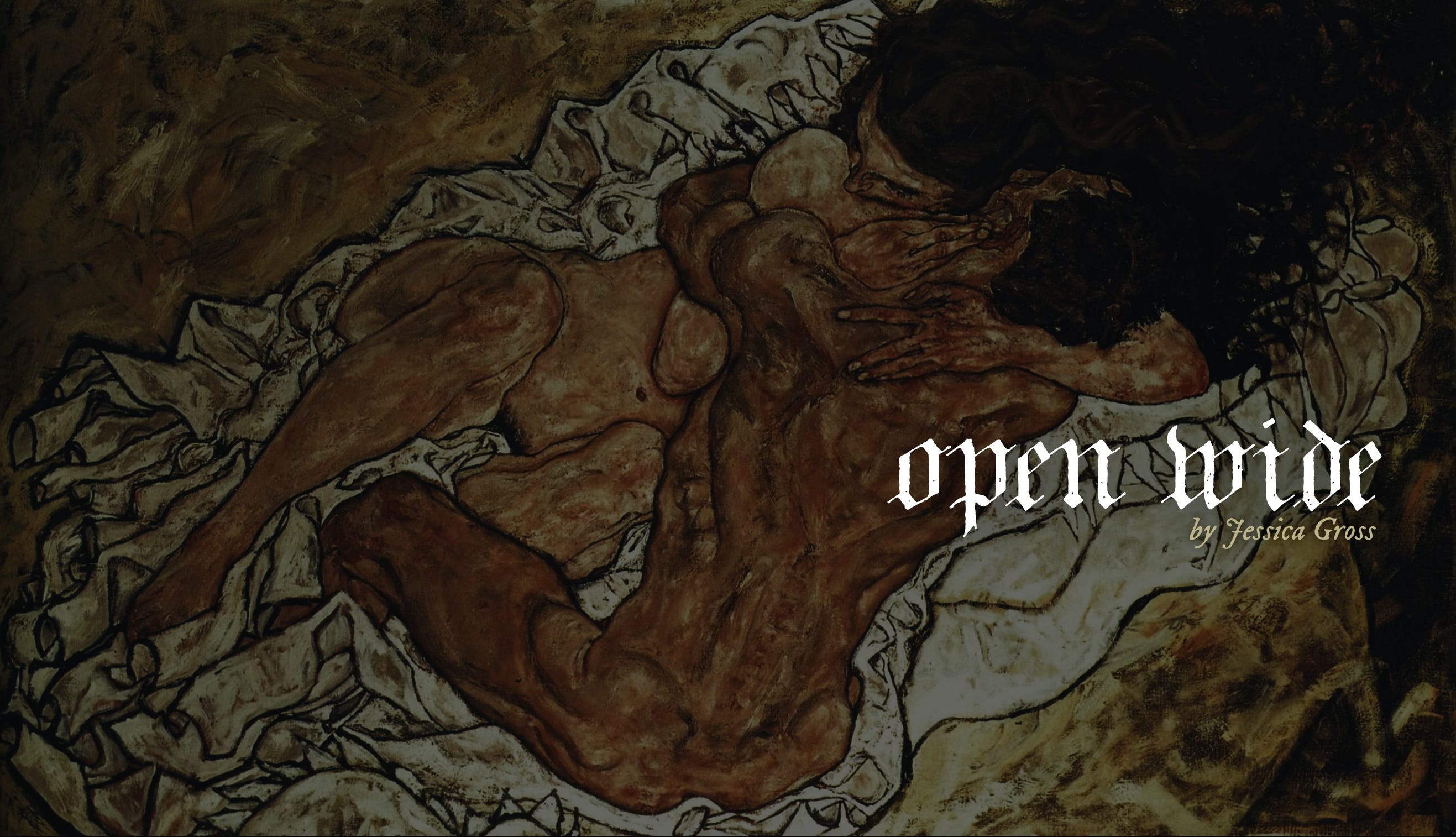
Could I also climb up into his arm, between his biceps and his triceps? Down his thigh, so I could lick his tendon from the inside? Up his neck and into his skull? Could I read his brain from in there, or nestle myself between its folds?
What is the most raw form of desire if not insatiable hunger?
The mere act of sex doesn’t necessarily come with the divine pleasure of eroticism. Erotica can be the encapsulation of the emotional side of sex and a means of exploring the themes and feelings that can be evoked within the act. The horror genre is stuffed to the brim with emotion. What happens when horror and erotica converge and the hunger that is uncovered is absolutely worth devouring.
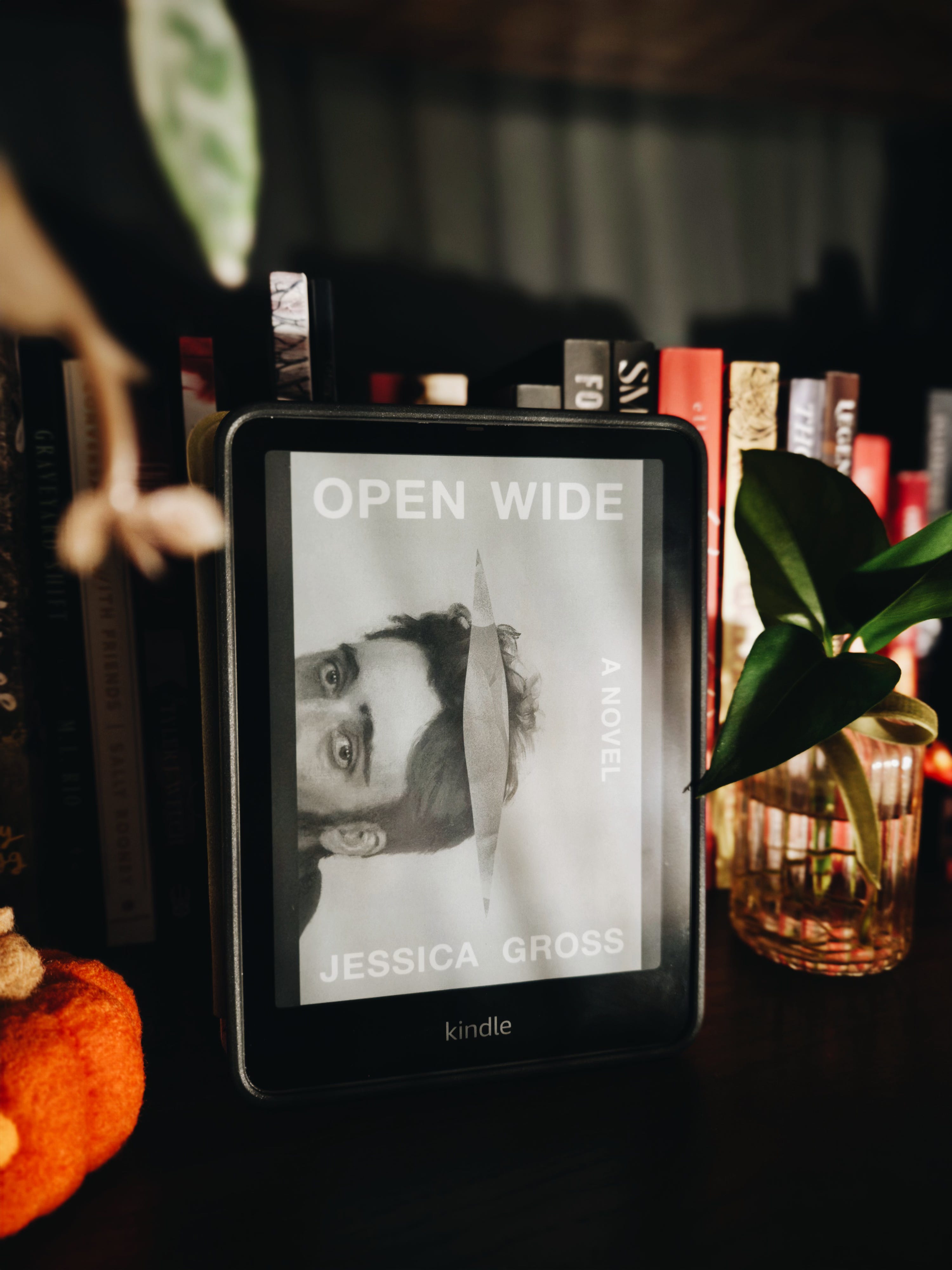
One of my favorite books of 2025 was Jessica Gross’s Open Wide. This novel takes the deep desire for intimacy to a grotesque literal conclusion. Olive is a well read, witty radio host in her thirties, but she’s never quite figured out how to normally connect with people. For as long as she can remember, Olive records all her conversations… dates, friendships, work interactions. She listens back to them obsessively, trying to decode the social cues that seem to come naturally to everyone else.
Insert leggy, gap toothed NYC beauty, Theo. A surgeon who is just about as strange as she is. Olive latches on to Theo as the only person who could ever understand her, outside of her little dog.
Over time, Olive teeters on the edge of obsession. Closeness isn’t enough and she doesn’t want Theo to slip through her fingers. One night, while watching Theo sleep, she discovers she can pry open the gap between his front teeth and unzip his long body right down the middle. Seeing him wide open for her feels like an invitation to crawl inside. So, she does – nestling between the warm slick of his organs and there, riding the wave of internal convulsions from Theo’s orgasm, Olive finally feels at peace.
It’s viscerally disgusting, but it’s also just so fucking honest. If we are lucky or unlucky – phrase it how you need – enough, we have felt this undeniable desire to reside within someone we love more than words can ever express. Shamelessly, I’m not going to lie, it’s incredibly hot. There is a level of eroticism of lying wholly and completely within the one you love.
Yet, there’s a bigger issue that Gross brings up in Open Wide. Olive’s need to literally inhabit Theo speaks to something I find women tend to do: disappear into our relationships with men. As if it is normal to see the highest form of love as self-erasure. Wanting to be seen, to be known, to matter and exist are merely demands we should temper rather than fundamental human rights. Olive takes this societal logic to its extreme.
If merger is the goal, if intimacy means becoming one with your partner, why stop at metaphor? It’s a raw look at codependency and how it can shape the definition of love.
The horrors within Open Wide aren’t really about climbing inside of your partner. The horror is recognizing how Olive even got there in the first place. Her hunger manifests through loneliness. It is exasperated by her social confusion and a desperate need for connection. She is told to feel and connect, but those around her swiftly turn to punish her for expressing too nakedly. That is the heart of this story. Gross writes Olive so fiercely human. Not a monster, but a woman who just took societal rules too seriously. The book actualizes what is so often asked of us by men: make yourself small enough to fit inside my life.
Olive refuses to be “good.” Refusing to manage her feverish hunger into palpable acceptability. Her actions are messy and destructive, but it is what happens when women release themselves from the vice grip of performance. I worry this narrative has been misinterpreted as Olive’s detachment from society thus a detachment from herself. The chaos of untethering isn’t a split of body and mind, it is the acceptance of sexual liberation into unity with body and mind — but she also get’s it wrong. Theo is not the home of which she deserves to reside within, but to her it feels as if it is the only solution. Olive becomes whole in ways that horrify precisely because wholeness, for women, isn't supposed to look like this. We're supposed to be ‘filled’ through self-denial, through service, through the graceful management of everything excessive or wanting or raw. She rejects these notions and says ‘no, I’m doing it my way.’
Some will look at this novel and say “how selfish of her.” Yes, it is selfish. No, we should not split open and climb within our lovers. But it exists because the demonization of a woman’s desire to just fucking be does not go without consequence. Open Wide is one of many examples within horror that showcase the metaphorical outcome of living in a body that is constantly up for debate.
These narratives are a vessel in which we can explore the insanity of surviving in a world that just does not like us. Which is truly why I believe this novel had such split reviews.
I hope something within this piece spoke to you and I hope you chose to read with an open, yearning mind. I wish more books like this existed and I’m glad that it does.
Jessica Gross is a little freak and I love her.
I've not read that book yet, but it's now on my list for 2026.
I read and thoroughly enjoyed Open Wide last year and had gone in totally blind too. There is absolutely a socially charged and relevant commentary here being explored around the ways women are meant to make themselves smaller in order to fit into the men in their lives life's, no doubt about that, although I feel, personally, that it's not solely a gender-specific theme as it can be a common thread in many relationships between two or more individuals, gender aside. But I understand that Gross is exploring this topic from the perspective of a woman and a man's relationship. I just found the concept in and of itself to be fascinating and painfully relatable for both myself and my own partner. The sections of the book where she records conversations between herself and the people she interacts with alone is going to strike home with my wife when she reads it hopefully later this year.
Loved your review here and hope that more people check this title out. I agree whole-heartedly on what you mentioned regarding how the reviews are divisive. I think the message(s) being explored, in some of the reviews I've seen have been taken in a direction I don't think the material is suggesting or even inspiring. Art is subjective, of course, but I can't help but feel a sense of melancholy that the stories deeper meaning and underlying themes are missed on some readers when I, like you, found them to be so profoundly beautiful and honest.